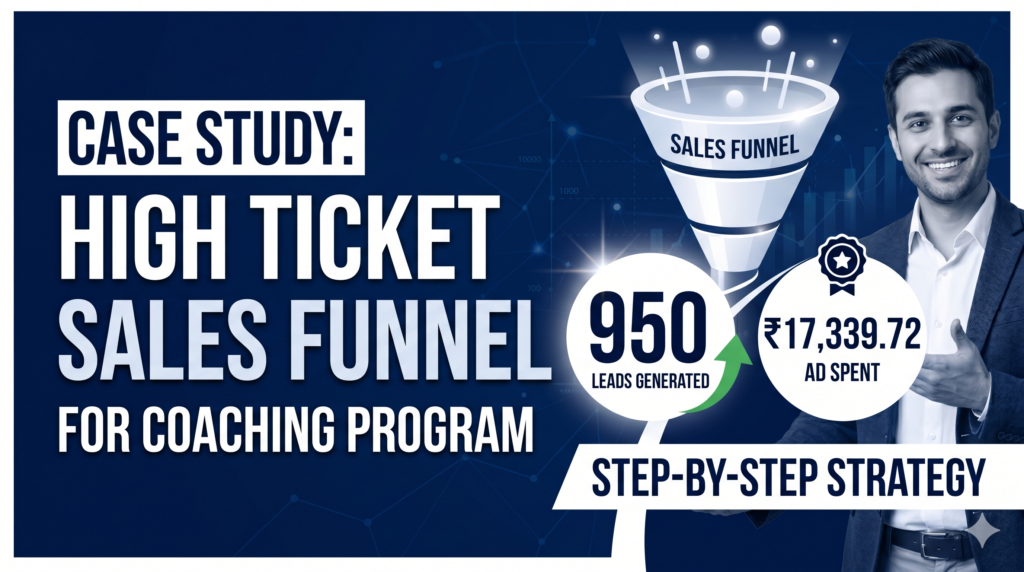

Selling a high-ticket coaching program is very different from selling a low-ticket product.
When the offer price is ₹49,999, people usually do not convert after seeing just one ad. They need awareness, trust, education, clarity, and a strong reason to take the next step.
That is why a proper high ticket sales funnel becomes important.
For ESG Pro Mastery, we built a two-step funnel that used a free webinar campaign to attract interested prospects and a retargeting campaign to promote the ₹49,999 coaching program to warmer audiences.
The objective was not just to generate leads.
The objective was to generate the right leads.
In one month, the campaign generated 950 leads at an average cost per lead of ₹18.25.
This case study breaks down how the funnel was structured, how the campaigns performed, and how we used webinar marketing, retargeting, price-based creatives, and a qualifier form to improve high ticket lead generation.
About ESG Pro Mastery
ESG Pro Mastery is an education and career-focused brand in the ESG and sustainability space.
The brand helps learners and working professionals understand ESG, sustainability reporting, GRI frameworks, career opportunities, and practical skills required to grow in the ESG industry.
The main offer promoted during this campaign was a 6-month ESG coaching program priced at ₹49,999.
The program focused on helping learners build career-ready ESG skills through practical learning, expert mentorship, certification guidance, industry-aligned curriculum, and placement assistance.
Since this was a high-ticket course, the campaign needed more than a simple lead generation setup.
It needed a complete funnel that could educate people first, build trust, and then filter serious prospects for the paid program.
The Challenge: Generating Qualified Leads for a ₹49,999 Coaching Program
The main challenge was not lead volume.
The real challenge was lead quality.
For a high-ticket coaching program, generating cheap leads is not enough. If the leads are not serious, not financially ready, or not clear about the value of the program, the sales team ends up spending time on poor-quality conversations.
The campaign needed to solve three key problems:
- Build awareness around ESG career opportunities.
- Generate leads at a reasonable cost.
- Filter serious prospects for the ₹49,999 coaching program.
This is where the high ticket sales funnel strategy became important.
Instead of promoting the paid course directly to a cold audience, we first used a free webinar to educate the audience and build interest.
After that, we retargeted interested users with the high-ticket coaching offer.
This helped create a smoother journey from awareness to enquiry.
The Funnel Strategy
The campaign was divided into two major stages.
The first stage was a free webinar campaign.
The second stage was a high-ticket retargeting campaign for the ₹49,999 coaching program.
Both campaigns had different roles.
The webinar campaign was built for awareness, education, and audience building.
The retargeting campaign was built for lead quality, sales intent, and qualification.
This structure allowed us to avoid one of the biggest mistakes in high-ticket marketing: asking cold users to immediately invest in an expensive offer before they understand the brand, the category, or the outcome.
Stage 1: Free Webinar Campaign for Audience Building
The first stage of the funnel promoted a free ESG and GRI-focused webinar.
This webinar was used as the top-of-funnel entry point.
The purpose of the campaign was to attract people who were interested in ESG, sustainability reporting, career growth, professional upskilling, and future career opportunities.
Instead of asking users to immediately invest ₹49,999, we invited them to attend a free educational session.
This made the offer easier to accept.
The free webinar helped prospects understand:
- What ESG is
- Why ESG skills are becoming important
- What GRI reporting means
- How sustainability reporting can create career opportunities
- What kind of skills are required in the ESG space
- How ESG Pro Mastery can help them grow
This stage helped build a warm audience that could later be retargeted for the paid coaching program.
For high ticket lead generation, this is an important step.
A cold audience usually needs education before they are ready for a high-ticket offer.
The webinar acted as that education layer.
Stage 2: Retargeting Campaign for the ₹49,999 Coaching Program
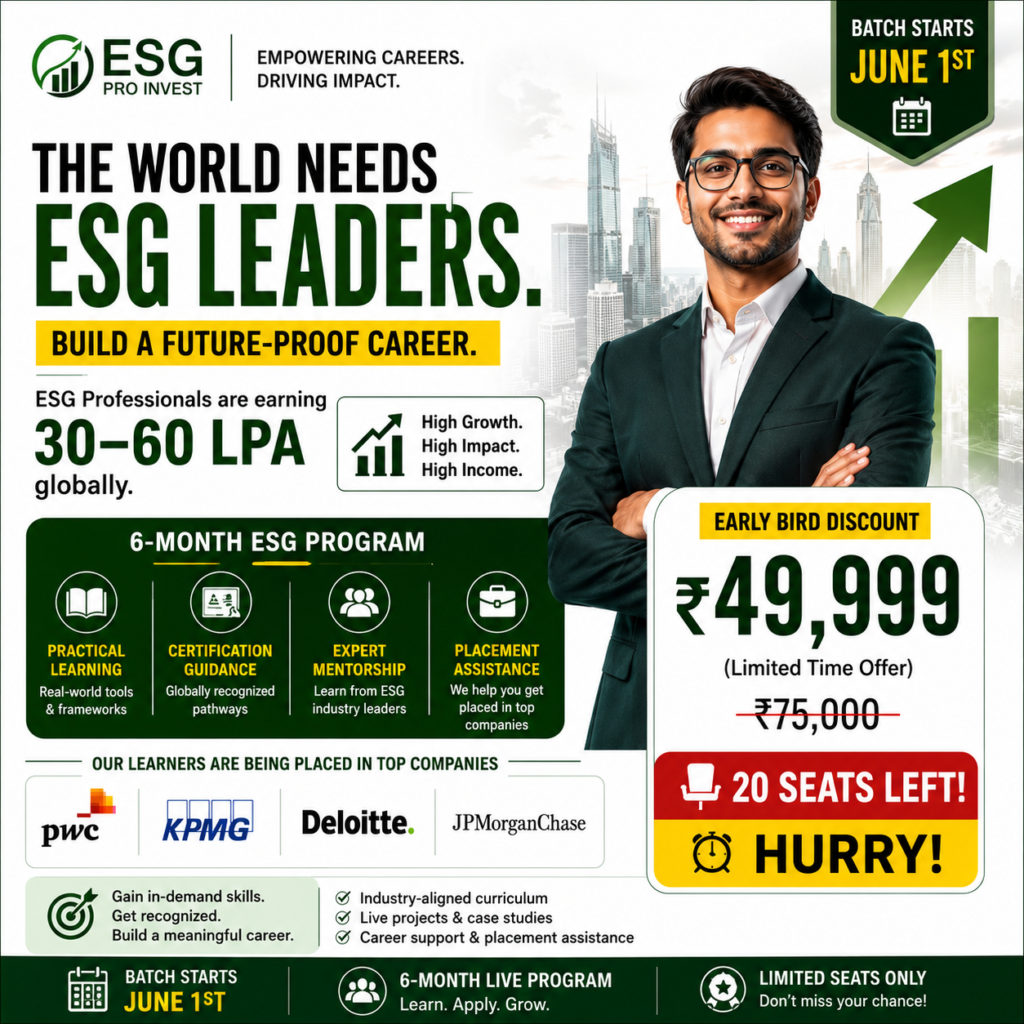
The second stage of the funnel was a retargeting campaign.
This campaign promoted the 6-month ESG coaching program priced at ₹49,999.
The goal of this campaign was not to reach everyone.
The goal was to reach people who had already shown interest and then identify the serious prospects among them.
The retargeting creatives clearly mentioned:
- ₹49,999 course price
- 6-month ESG program
- Placement assistance
- Certification guidance
- Expert mentorship
- Industry-aligned curriculum
- Limited seats
- Batch start date
- Early bird offer
Mentioning the price directly in the ad was intentional.
In many campaigns, advertisers hide the price because they want more leads.
But in high-ticket lead generation, more leads are not always better.
If people submit a form without knowing the price, many of them may drop off once the sales team reveals the investment amount.
That creates wasted follow-up effort and poor sales efficiency.
By showing the ₹49,999 price upfront, the creative itself worked as a pre-filter.
People who were not financially ready were less likely to submit the form.
People who still submitted the form were more likely to understand the seriousness of the offer.
This helped improve the quality of leads entering the sales process.
Why We Used a Webinar Before Selling the High-Ticket Program
A high-ticket sales funnel works best when the audience is educated before being sold to.
For ESG Pro Mastery, the ₹49,999 coaching program required trust and context.
People needed to understand why ESG is a growing field, what kind of career opportunities exist, and how structured learning could help them move forward.
If we had promoted the ₹49,999 program directly to cold users, the friction would have been much higher.
Cold users may not know:
- Who the brand is
- Why the program costs ₹49,999
- What outcome they can expect
- Whether ESG is a real career opportunity
- Whether the program is suitable for them
- Whether they are ready to invest
The webinar helped solve this problem.
It gave prospects a low-risk first step.
They could attend a free session, learn about the opportunity, and become familiar with the brand before seeing the paid offer.
This made the retargeting campaign more effective because the audience was already warmer.
That is the foundation of a strong high ticket sales funnel.
You do not force the sale too early.
You create awareness first, build trust second, and then make the offer to people who have shown interest.
Campaign Results
Here is the overall campaign performance for the month.
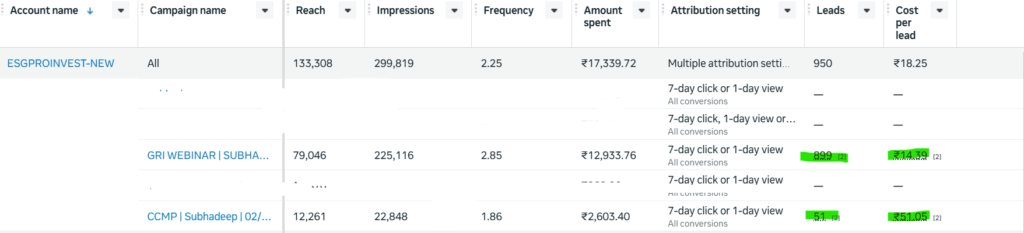
| Metric | Result |
|---|---|
| Total Reach | 133,308 |
| Total Impressions | 299,819 |
| Average Frequency | 2.25 |
| Total Amount Spent | ₹17,339.72 |
| Total Leads Generated | 950 |
| Average Cost Per Lead | ₹18.25 |
The campaign generated 950 total leads at an average cost per lead of ₹18.25.
For a niche education brand selling a ₹49,999 coaching program, this created a strong pool of prospects for nurturing, qualification, and sales follow-up.
The result also showed that a high-ticket funnel does not always need to start with expensive lead costs.
When the funnel is structured correctly, the top-of-funnel campaign can build a large audience at a low CPL, while the retargeting campaign can focus on higher-intent prospects.
Free Webinar Campaign Performance
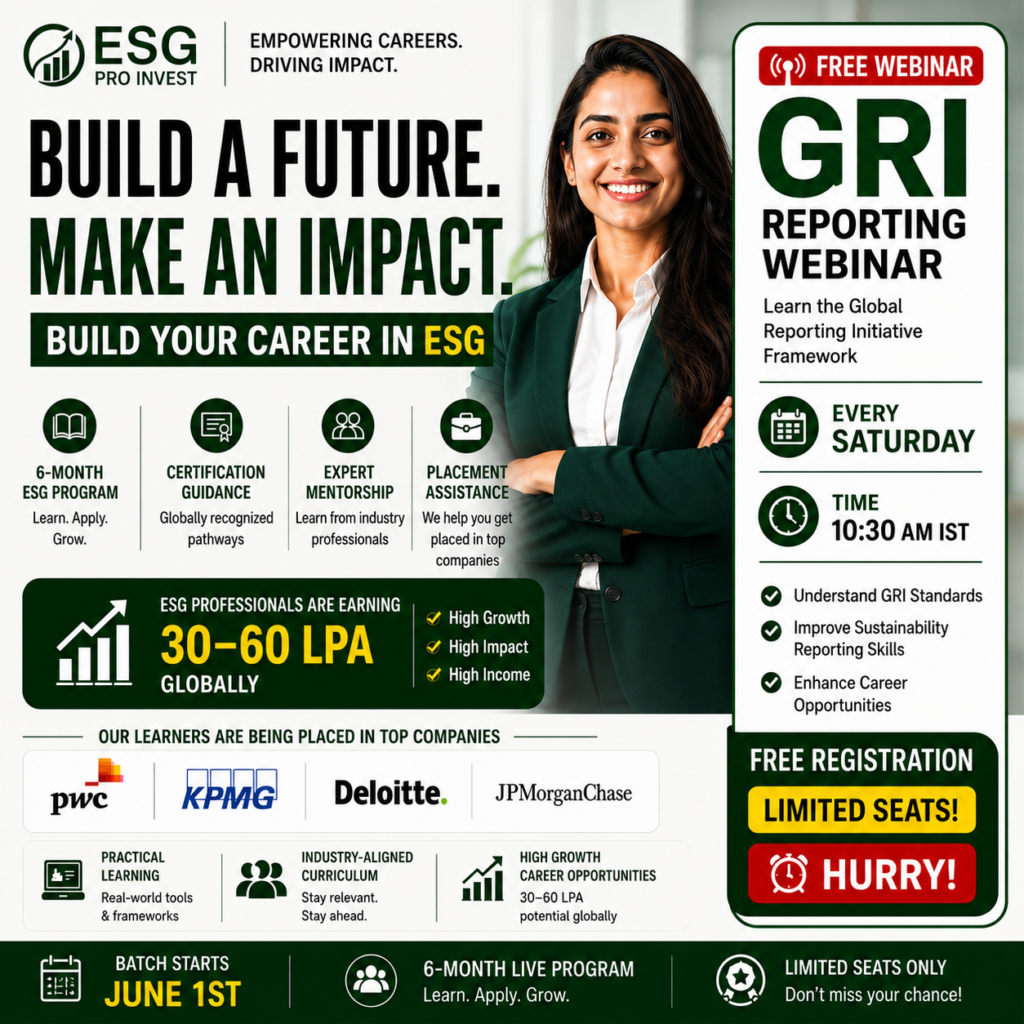
The free webinar campaign was the audience-building engine of the funnel.
| Metric | Result |
|---|---|
| Reach | 79,046 |
| Impressions | 225,116 |
| Frequency | 2.85 |
| Amount Spent | ₹12,933.76 |
| Leads | 899 |
| Cost Per Lead | ₹14.39 |
The webinar campaign generated 899 leads at ₹14.39 CPL.
This campaign worked well because the offer was low-friction.
People were not being asked to buy immediately. They were being invited to learn.
The webinar creatives focused on free education, ESG career opportunities, GRI reporting, sustainability skills, and practical learning.
This helped attract people who were curious about ESG and open to exploring the opportunity.
The main purpose of this campaign was not direct sales.
The purpose was to create a relevant audience pool for future conversion.
This is one of the most important principles in high ticket lead generation.
The first campaign should often focus on building trust and capturing interest, not forcing an immediate purchase decision.
High-Ticket Coaching Retargeting Campaign Performance
The retargeting campaign promoted the ₹49,999 ESG coaching program.
| Metric | Result |
|---|---|
| Reach | 12,261 |
| Impressions | 22,848 |
| Frequency | 1.86 |
| Amount Spent | ₹603.40 |
| Leads | 51 |
| Cost Per Lead | ₹51.05 |
The retargeting campaign generated 51 leads at ₹51.05 CPL.
This CPL was higher than the webinar campaign, which is expected.
The webinar campaign was designed for volume.
The retargeting campaign was designed for quality.
Since the retargeting creatives clearly mentioned the ₹49,999 price, the campaign naturally filtered out people who were not ready for that level of investment.
This made the leads more relevant for the sales team.
For high-ticket offers, a higher CPL is not always a problem.
The real question is whether the lead is qualified, financially aware, and ready for a serious conversation.
In this campaign, the retargeting campaign was built exactly for that purpose.
The Qualifier Form: Filtering Serious Leads Before Sales
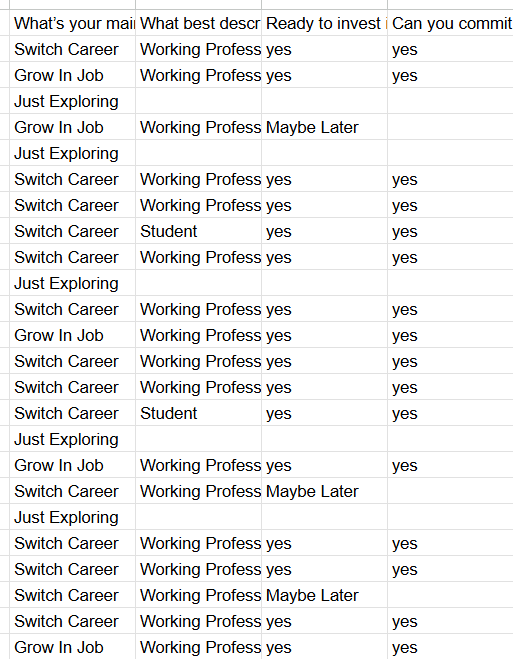
One of the most important parts of the funnel was the qualifier form.
For a ₹49,999 coaching program, every lead should not be treated the same way.
Some people are just exploring.
Some people are interested but not ready.
Some people are ready to invest and commit.
The qualifier form helped identify these differences before the sales conversation.
The form asked questions around:
- The user’s main goal
- Their current profile
- Whether they were ready to invest
- Whether they could commit
From the responses, many leads selected options such as:
- Switch career
- Grow in job
- Working professional
- Ready to invest: Yes
- Can commit: Yes
This helped the sales team understand the quality and intent of each lead.
Instead of calling every lead blindly, the team could prioritize people who had stronger buying intent.
This is a key part of any high ticket sales funnel.
The funnel should not only generate leads.
It should also help the business identify which leads deserve immediate attention.
A good funnel improves both marketing performance and sales efficiency.
Creative Strategy: Matching the Message to the Funnel Stage
The creative strategy was different for each stage of the funnel.
This was one of the reasons the campaign worked.
We did not use the same message for every audience.
Instead, the message changed based on the user’s awareness level.
At the top of the funnel, the creatives focused on free learning and career awareness.
At the retargeting stage, the creatives focused on the paid program, price, urgency, and career transformation.
This helped each campaign do its job properly.
Top-of-Funnel Creative Angle: Free Learning and Career Awareness
For the webinar campaign, the creatives focused on education and opportunity.
The main angles were:
- Free ESG workshop
- Free GRI webinar
- Learn ESG concepts
- Understand GRI standards
- Improve sustainability reporting skills
- Explore ESG career opportunities
- Attend a live session
- Ask questions to an expert
- Reserve a free seat
This type of messaging worked well because it reduced friction.
The audience did not need to make a financial decision immediately.
They only needed to register for a free session.
The strongest hooks for this stage included:
- “Free ESG Workshop”
- “GRI Reporting Webinar”
- “Build Your Career in ESG”
- “Learn. Explore. Grow Your Career in ESG”
- “Understand GRI Standards”
- “Enhance Career Opportunities”
These hooks were educational, simple, and career-focused.
They helped attract people who were interested in ESG but not yet ready to buy a paid program.
That made them perfect for the awareness stage of the funnel.
Retargeting Creative Angle: Career Transformation and Price Filtering
For the retargeting campaign, the creatives became more direct.
The audience had already shown interest, so the messaging could move from education to offer.
The retargeting creatives focused on:
- ₹49,999 course price
- 6-month ESG program
- Placement assistance
- Certification guidance
- Expert mentorship
- Industry-aligned curriculum
- Limited seats
- Batch start date
- Early bird discount
- High-growth ESG career path
The strongest hooks for this stage included:
- “The World Needs ESG Leaders”
- “Build a Future. Make an Impact.”
- “Build Your Career in ESG”
- “ESG Professionals Are Earning 30–60 LPA Globally”
- “20 Seats Left”
- “Early Bird Offer ₹49,999”
These creatives were not designed only to get clicks.
They were designed to qualify.
By showing the price, duration, benefits, and urgency, the ads attracted people who were more serious about the program.
This is especially important in high ticket lead generation because unqualified leads can waste sales time.
The creative should not only create curiosity.
It should also help filter the audience.
Why Mentioning ₹49,999 in the Creative Helped Improve Lead Quality
Many advertisers avoid showing the price in ads because they worry it will reduce the number of leads.
That concern is understandable.
But for high-ticket offers, hiding the price can create a bigger problem.
It can increase lead volume while reducing lead quality.
If people only discover the price during the sales call, many of them may drop off.
This creates unnecessary work for the sales team.
In this campaign, the ₹49,999 price was shown directly in the retargeting creatives.
This helped in three ways.
First, it filtered out people who were not financially ready.
Second, it attracted prospects who understood the investment required.
Third, it helped the sales team speak to people who were more serious from the beginning.
This is a useful lesson for any high ticket sales funnel.
The ad should not only generate interest.
It should also set expectations.
When the offer is high-ticket, clarity can be better than curiosity.
What Made This High Ticket Sales Funnel Work
This funnel worked because every stage had a clear purpose.
The webinar campaign created awareness.
The retargeting campaign introduced the high-ticket offer.
The price-led creative filtered the audience.
The qualifier form identified serious prospects.
Together, these elements created a funnel that was built for both lead volume and lead quality.
Here are the main reasons the funnel worked.
1. The Webinar Built Trust Before the Sale
The free webinar gave prospects a low-risk way to engage with the brand.
It educated them before they saw the paid offer.
This helped reduce resistance when the ₹49,999 coaching program was promoted later.
2. Retargeting Improved Lead Intent
The high-ticket campaign was shown to people who had already interacted with the brand or shown interest.
This made the audience warmer than cold traffic.
Warmer audiences usually understand the context better and are more likely to take the next step.
3. The Price Worked as a Pre-Filter
The ₹49,999 price was not hidden.
It was shown clearly in the creative.
This helped filter out casual users and attract people who were more financially ready.
4. The Qualifier Form Improved Sales Efficiency
The form helped identify people who were ready to invest and commit.
This made the follow-up process more efficient and helped the sales team prioritize better leads.
5. The Offer Was Positioned Around Outcomes
The creatives did not only talk about course features.
They focused on career growth, ESG opportunities, placement assistance, certification guidance, practical learning, and future-ready skills.
This made the offer feel outcome-driven instead of just information-based.
Key Learnings from the Campaign
Lesson 1: High Ticket Lead Generation Needs a Funnel
For a ₹49,999 coaching program, direct ads alone may not be enough.
A funnel helps move people from awareness to interest to qualified enquiry.
The free webinar gave prospects a reason to engage before seeing the paid offer.
Lesson 2: Cheap Leads and Qualified Leads Come from Different Funnel Stages
The webinar campaign generated leads at ₹14.39 CPL.
The retargeting campaign generated leads at ₹51.05 CPL.
Both campaigns had different roles.
The webinar campaign created volume.
The retargeting campaign created more serious enquiries.
This is why CPL should always be judged based on funnel stage and lead intent.
Lesson 3: Free Webinars Work Well for Niche Education Brands
The free ESG workshop and GRI webinar helped attract people interested in ESG careers and sustainability reporting.
This made the audience more relevant for the paid coaching program.
For niche education brands, webinars can work very well because they educate the market while generating leads.
Lesson 4: Price-Led Creatives Can Improve Lead Quality
Mentioning ₹49,999 in the ad reduced casual enquiries.
It helped attract prospects who were more aware of the investment required.
For high-ticket sales funnels, this can be a smart strategy.
Lesson 5: Qualifier Forms Protect the Sales Team’s Time
The qualifier form made it easier to identify leads who were ready to invest and commit.
This helped separate serious prospects from casual browsers.
For high-ticket offers, this step can make a major difference in sales productivity.
Final Results Summary
In one month, the funnel generated:
| Result | Number |
|---|---|
| Total leads | 950 |
| Total ad spend | ₹17,339.72 |
| Average CPL | ₹18.25 |
| Webinar leads | 899 |
| Webinar CPL | ₹14.39 |
| High-ticket retargeting leads | 51 |
| High-ticket retargeting CPL | ₹51.05 |
| Total reach | 133,308 |
| Total impressions | 299,819 |
The campaign successfully built a high ticket lead generation system for ESG Pro Mastery.
The free webinar created awareness and trust.
The retargeting campaign promoted the ₹49,999 coaching program.
The qualifier form filtered serious prospects.
Together, these elements created a funnel that was built not just for lead volume, but for sales readiness.
Conclusion: What This Case Study Proves About High Ticket Sales Funnels
This campaign proves that high-ticket lead generation is not only about running ads.
It is about building the right journey.
For ESG Pro Mastery, we did not push a ₹49,999 coaching program directly to cold users.
Instead, we built a funnel where people could first learn, then engage, then get retargeted, and finally qualify themselves through a form.
That is what made the campaign more effective.
A strong high ticket sales funnel should:
- Educate cold audiences
- Build trust before selling
- Retarget interested users
- Show the offer clearly
- Mention the price when needed
- Use forms to qualify leads
- Help the sales team focus on serious prospects
For coaches, course creators, consultants, and education brands, this approach can be much more effective than simply running lead ads and hoping for conversions.
If your offer is high-ticket, your funnel needs to do more than generate leads.
It needs to generate the right leads.
Want to Build a High Ticket Sales Funnel for Your Coaching Program?
If you are selling a high-ticket course, coaching program, consulting offer, or training program, you do not need more random leads.
You need a funnel that attracts, educates, qualifies, and converts the right people.
I help coaches, course creators, consultants, and education brands build paid ad funnels that generate qualified leads and sales opportunities.
If you want a funnel like this for your offer, book a strategy call and let’s discuss how we can build a high ticket lead generation system for your business.
About The Founder

I’m a client acquisition and paid marketing specialist with 3 years of experience helping agencies and service businesses build social media growth and B2B lead generation campaigns.I’ve worked with UAE and Singapore-based agencies, supported campaigns across different markets, and earned Fiverr Level 1 freelancer status by delivering practical marketing work for clients.My current focus is helping coaching institutes, consultants, and high-ticket service providers build trackable acquisition systems — including landing pages, lead qualification, tracking, retargeting, and paid campaigns — so they can attract better prospects and turn interest into sales conversations.